
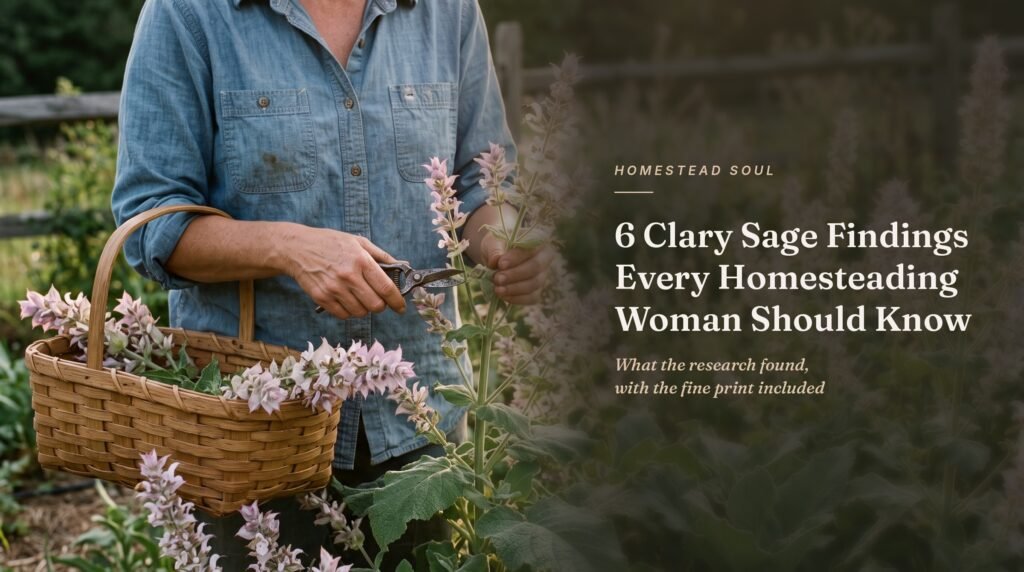
6 Clary Sage Findings Every Homesteading Woman Should Know
If you keep a kitchen garden, a few herb beds or a row of pollinator plants, clary sage deserves a spot. Homesteaders have grown it for centuries. Greek and Roman writers recorded its uses, and in 1653 the herbalist Nicholas Culpeper called it “clear-eye.”
Now researchers are starting to measure what herbalists noticed long ago. The studies are still small, but some results are encouraging. Here are six worth knowing, each with its fine print, plus notes on growing it yourself.
1. Blood pressure dropped during a stressful medical exam
In a randomized, double-blind trial, women undergoing an uncomfortable bladder exam inhaled clary sage oil, lavender oil or plain almond oil for an hour. In the clary sage group, systolic blood pressure fell 4.7% (from 117 to about 111) and diastolic fell 5.1%. In the almond oil group, both rose.
Fine print: 34 women, one session. (Seol et al., 2013)
2. Breathing slowed, too
In the same trial, the clary sage group’s breathing rate fell 5.5%, while the almond oil group’s rose 5.4%. Slower breathing is one of the body’s clearest signs of settling down.
Fine print: Pulse and saliva cortisol didn’t change significantly between groups. (Seol et al., 2013)
3. It beat lavender in a head-to-head test
Lavender is the best-known calming scent, so this result stands out. In that trial, the lavender group’s systolic blood pressure rose 4.7%, while the clary sage group’s fell by the same amount. The difference between the two was statistically significant.
Fine print: That’s one study in one setting. Lavender has plenty of research of its own. (Seol et al., 2013)
4. Cortisol fell in women in their 50s
Korean researchers measured cortisol, often called the stress hormone, in 22 menopausal women before and after they inhaled clary sage oil. Cortisol fell significantly, and serotonin, a brain chemical tied to mood, rose.
Fine print: The study was small, the abstract describes no placebo group, and it measured blood levels, not symptoms like hot flashes or sleep. (Lee, Cho & Kang, 2014)
5. The biggest changes came in women who were struggling most
In that same study, women who scored higher on depression questionnaires saw larger cortisol drops. On one scale the drop was 36%, compared with 8.3% in the other group. The researchers described the oil as having an “antidepressant-like effect.”
Fine print: That’s an early signal from 22 people, not a treatment. Anyone dealing with depression deserves care from a professional. (Lee, Cho & Kang, 2014)
6. It’s in blends that eased menstrual cramps
A 2018 review pooled 19 placebo-controlled trials with about 1,800 women. Aromatherapy reduced cramp pain more than placebo, and two of the blends tested paired clary sage with lavender and either rose or marjoram.
Fine print: The authors called the evidence “suggestive,” and because the oils were blended, clary sage can’t take credit alone. (Lee et al., 2018, via Massage Magazine)
Bonus: North Carolina helps the world’s perfumes last
Clary sage contains sclareol, which perfumers refine into a fixative that helps scents linger. Since 1978, farms in northeastern North Carolina’s Bertie and Chowan counties have grown it for that purpose. By 2016, more than 100 farmers there were growing about 24,000 acres. (Our State, 2016)
What to take from this
These studies don’t prove that clary sage treats anything. No study has shown that it balances hormones, and none tested incense or room spray. But together they suggest that smelling clary sage may go along with a calmer body, which is what the herbalists said all along.
If hot flashes, sleep or mood are disrupting your life, talk with your doctor. Clary sage is often flagged for caution in pregnancy, so check with your provider first if you’re expecting.
Growing clary sage on your homestead
- Plan for two seasons. Clary sage is a biennial. The first year it grows a low rosette of large, fuzzy, gray-green leaves. The second year it sends up 3–4 foot flower stalks with lilac, pink and white bracts, and it often reseeds itself.
- Give it sun and drainage. It wants full sun and well-drained soil, and it dislikes wet roots over winter. It’s hardy in roughly USDA zones 5–9, which covers most of the Southeast.
- Expect visitors. Bees and other pollinators crowd the blooms in early summer.
- Know the smell. Brushing the leaves releases a strong, musky scent. Some people love it and some find it pungent.
- Harvest in bloom. Cut flowering tops when they’re fully open and hang them to dry for sachets and bundles.
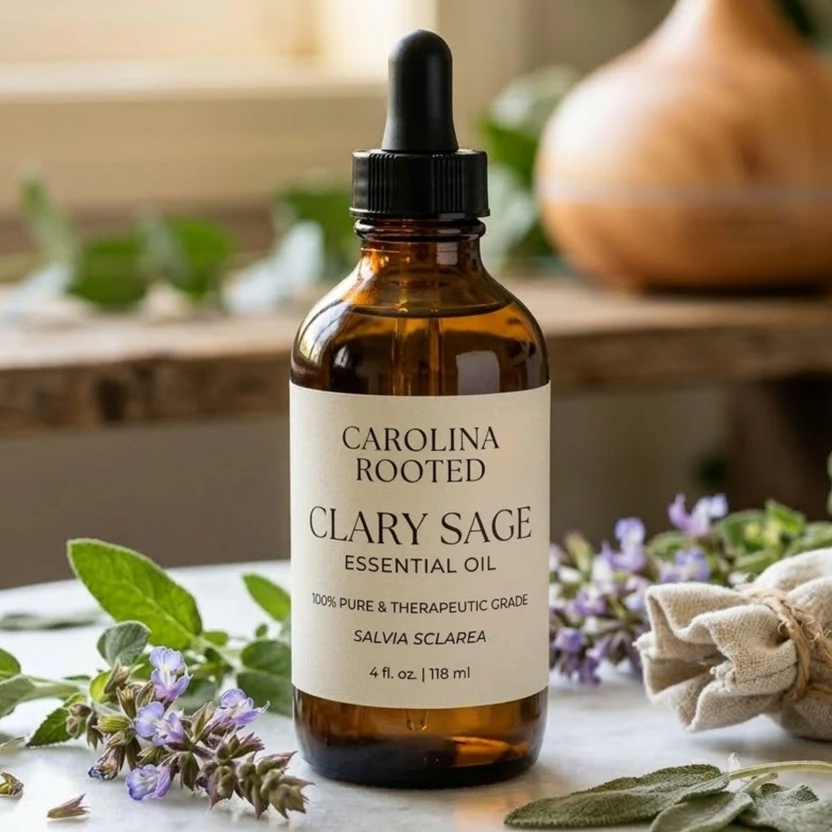
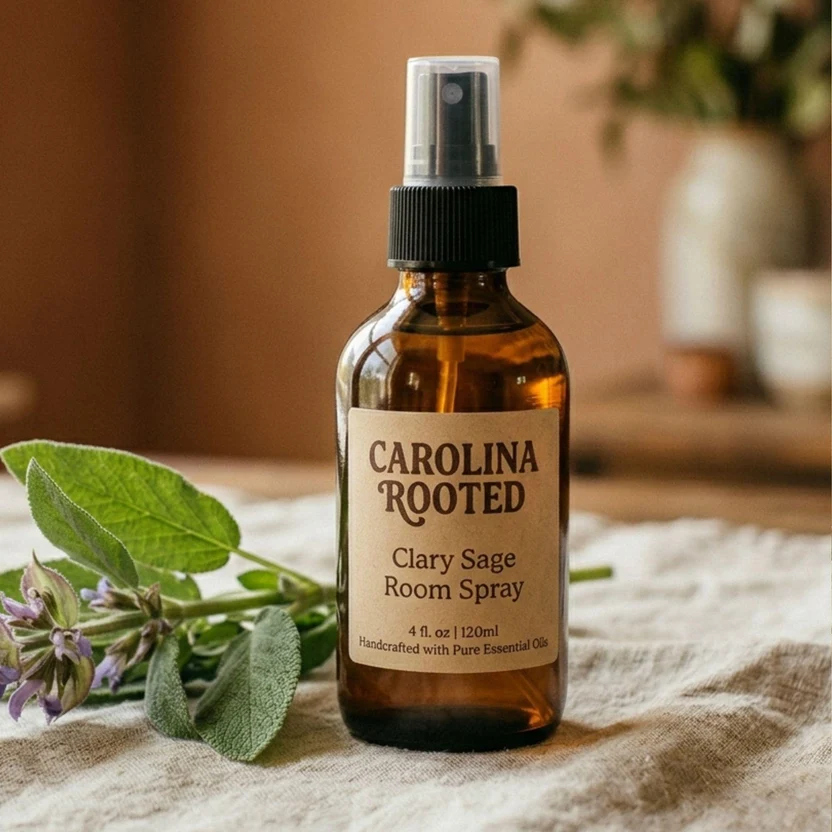
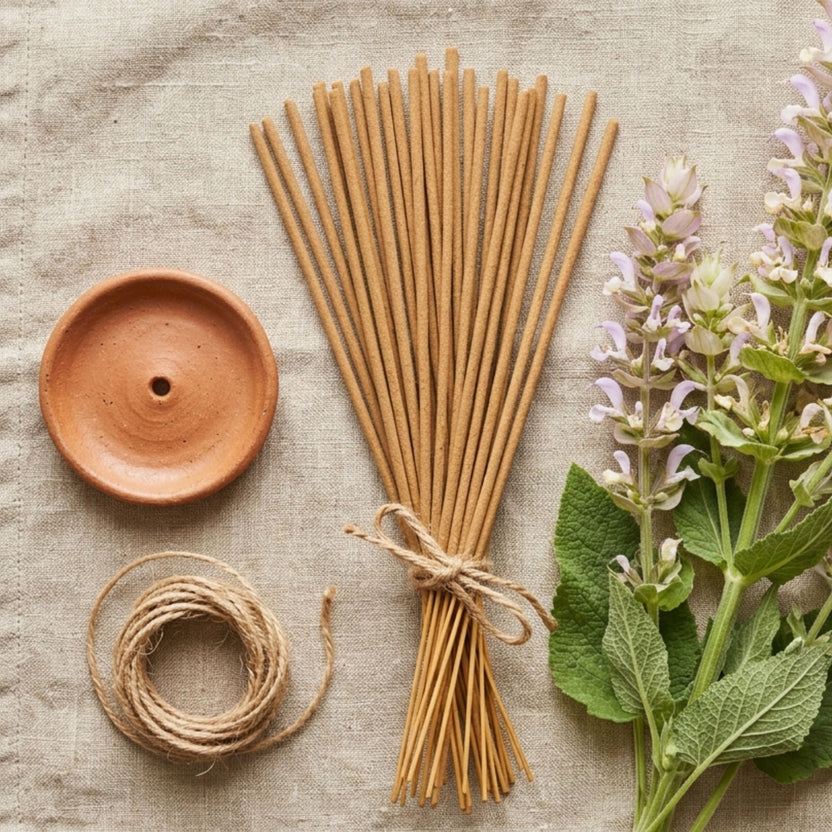
Farm-Grown Clary Sage Essential Oil, Room Spray & Incense
Clary Sage is fun to grow, but it takes time and you need a significant amount. Carolina Rooted is a farm based out of North Carolina. They craft and ship Clary Sage aromatherapy products directly to you.
Sources
- Seol GH et al. Randomized controlled trial for Salvia sclarea or Lavandula angustifolia. J Altern Complement Med, 2013;19(7):664–670.
- Lee KB, Cho E, Kang YS. Changes in 5-hydroxytryptamine and cortisol plasma levels in menopausal women after inhalation of clary sage oil. Phytotherapy Research, 2014;28(11):1599–1605.
- Lee MS et al. Aromatherapy for managing pain in primary dysmenorrhea, J Clin Med, 2018, as summarized by Massage Magazine.
- Markovich J. Clary Sage’s Smell of Success. Our State, May 12, 2016.
- Salvia sclarea, Wikipedia.